CULTURAL DYNAMICS: THE LEGACIES OF ARCHBISHOP A.K. OBIEFUNA
B. A. C. Obiefuna
All rights reserved. No part of this publication may be reproduced, stored in a retrieval system, or transmitted, in any form or by any means electronic, mechanical photocopying, recording, or otherwise, without the prior notice or written permission of the author

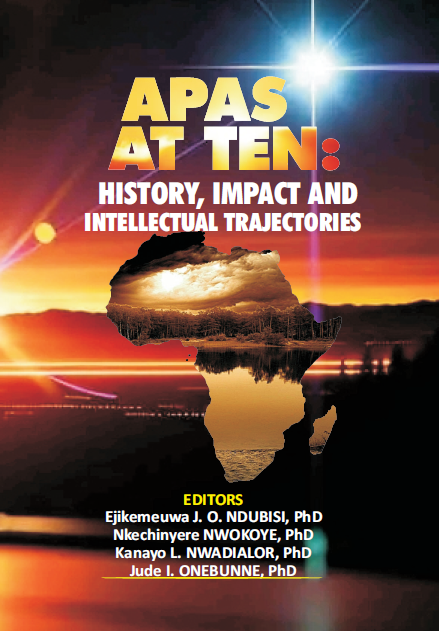
APAS AT TEN: HISTORY, IMPACT AND INTELLECTUAL TRAJECTORIES
Ejikemeuwa J. O. NDUBISI, PhD Nkechinyere NWOKOYE, PhD Kanayo L. NWADIALOR, PhD Jude I. ONEBUNNE, PhD
This book marks a significant milestone in the life and journey of the Association for the Promotion of African Studies (APAS. Founded in 2016 from a compelling vision to promote, preserve, and advance African thought, culture, and identity… it has grown into a vibrant scholarly movement with far-reaching influence across Africa and the diaspora. This book in your hand is both a celebration and a reflection… celebrating ten years of committed scholarship, institutional resilience, and intellectual camaraderie, while critically engaging the origins, foundations, and future prospects of APAS… offering a rich tapestry of interdisciplinary perspectives. It is a testament to the collective effort of scholars… a shared commitment to intellectual excellence, cultural affirmation, and the re-centering of Africa in global knowledge production… It is our hope that this book will serve not only as a record of past accomplishments but also as a catalyst for future scholarship. Scholars, students, and readers alike are invited to engage with the ideas presented herein, to interrogate them, and to build upon them in the ongoing quest for an authentic and transformative African intellectual tradition … I warmly commend this book to a wide audience of readers: scholars, researchers, students, policymakers, and all who are committed to the advancement of African studies. … The chapters contained herein are not only intellectually stimulating but also profoundly relevant to contemporary debates about identity, development, and knowledge production in Africa and beyond …In celebrating ten years of APAS, we celebrate more than an institution; we celebrate a movement… rooted in the conviction that Africa must speak for itself, define itself, and shape its own intellectual destiny.
SOCIAL STUDIES EDUCATION AND INQUIRY METHOD OF TEACHING
I am highly delighted to have the unique opportunity to recommend this book “Social Studies Education and the Inquiry Method of Teaching” to all prospective teachers. The book has been written at the most appropriate time by a dynamic lecturer who not only saved his colleagues the trouble of text materials but also provide the student with the most appropriate materials on the subject. The simplicity of expression with words shows the expertise of the writer.
ONEBUNNE
AN EXERCISE IN AFROCENTRIC HERMENEUTICS OF TRUTH
Jude I. Onebunne
Let's delve into the profound questions of human purpose, self-realization, and existential authenticity. Drawing from existentialist, phenomenological, and spiritual traditions, these studies explore the inner dimensions of being, emphasizing personal responsibility, freedom, and the search for meaning in an often-ambiguous world. Through critical engagement with thinkers and contemporary voices, the works illuminate how authentic existence is cultivated not through external validation, but through inward reflection, moral courage, and the conscious shaping of one’s life path. Together, these contributions offer a rich, introspective lens on living meaningfully in an age of distraction and alienation.
EPISTEMOLOGY AT A GLANCE
Hyginus Chibuike Ezebuilo
The subject matter of Epistemology (Theory of Knowledge) is human knowledge; its nature, origin, scope and justification. It probes into the meaning and nature of human knowledge. It reflects on issues such as truth and justification which constitute for some scholars, the criteria qualifying any belief to count as knowledge. It also examines and attempts to set out the possibility of knowledge and foundations of certainty of knowledge. Epistemology is closely related to employs data received from Metaphysics in its study of human knowledge. The Regress Problem arises, considering the question of the logical foundations of human knowledge. Responses to this problem gave rise to different paradigms of thought— Coherentism, Foundationalism, Infinitism and Foundherentism. Finally, the question arises whether or not knowledge is even possible, given the difficulty in satisfying the condition of epistemic certainty which is at the heart of the definition of knowledge itself. This gave rise to the problem of Philosophic Skepticism which is almost as old as Philosophy itself and remains an intractable epistemological problem. Arguments raised against skepticism include the Polar Argument and the Paradigm Case Argument.
AGAINST HUME’S METAPHYSICAL NIHILISM
In Defence of Metaphysics
Ejikemeuwa J. O. NDUBISI
A cursory glance under the veneer of the historical evolution of philosophy, beginning from the ancient era to the contemporary epoch, shows that from the very foundation, philosophy has been concerned with the task of providing answers to fundamental questions, to which however, no conclusive answers are given. Within the parameters of metaphysics, a retinue of questions emerge: What is the meaning of life? What is our place in the universe? What is consciousness? Does the world exist? Why is there something, rather than nothing? Do we have free will? Does God exist? Does any of these - even my act of questioning - matter?
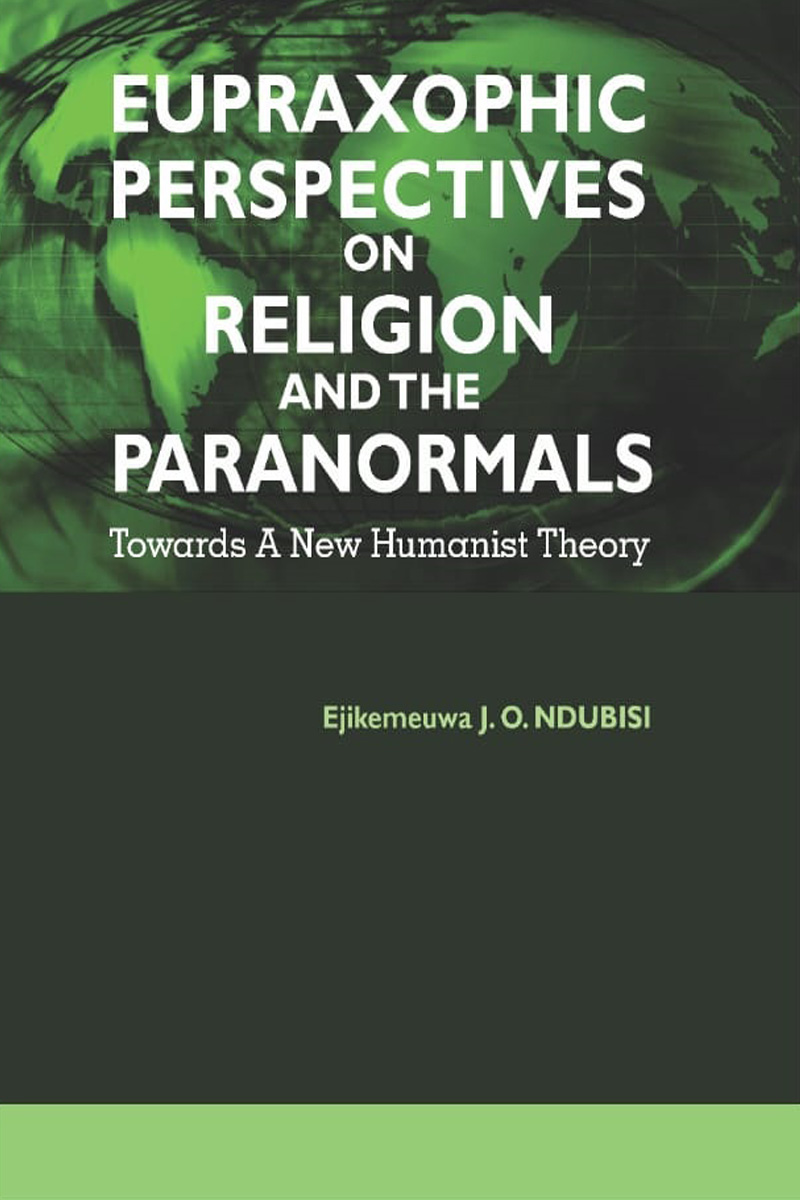
EUPRAXOPHIC PERSPECTIVES ON RELIGION ANDTHE PARANORMALS
Towards a New Humanist Theory
Ejikemeuwa J. O. NDUBISI
In The Meaning of Human Existence, Edward Osborne Wilson is reported to have attempted answers to the puzzles of human existence namely, who am I? what should I do in life? What is the meaning of life? These interrogatives which have situated the human species on an evolutionary continuum have not been fully answered by humans from time immemorial. Argued pointedly, Osborne acknowledged the fact that science latterly established the origins of Homo sapiens and the ultimate insignificance of the species in the universe though, humans still remained beholden to primitive survival impulses that lacked utility in contemporary society, leading to religious and tribal conflicts.
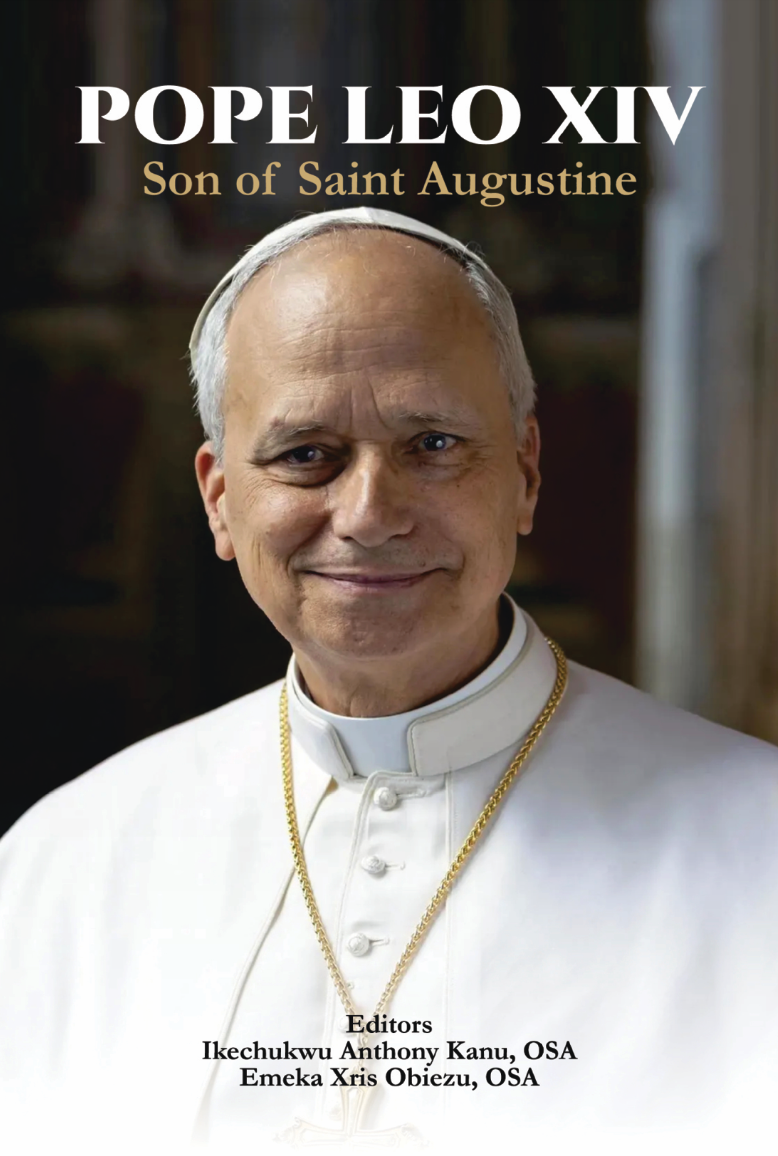
POPE LEO XIV
Son of Saint Augustine
Ikechukwu Anthony Kanu, OSA Emeka Xris Obiezu, OSA
Saint Augustine, a bishop and theologian of the early Christian Church, left an indelible mark on Christian thought and practice. His Letters, Sermons, and writings on original sin, salvation, grace, free will, the nature of God, church and state continue to influence theological discourse to this day. The intersection between Augustine's theological and philosophical insights and Pope Leo XIV's efforts to navigate the challenges of modernity is a rich area of study, revealing the enduring relevance of Augustine's ideas. Making a nexus between the thoughts of Saint Augustine, Augustinian patrimony, Pope Leo XIII, and Pope Leo XIV unveils the broad intellectual and pastoral leadership that characterizes the present papacy and highlights the ongoing dialogue between tradition and modernity.
PHILOSOPHY OF ENTREPRENEURSHIP
Intersections and Insights
Ikechukwu Anthony Kanu, PhD Timothy Dokpesi Adidi, PhD Catherine Chiugo Kanu, PhD Philip Osarobu Isanbor, PhD
This book reflects the changing landscape of entrepreneurship, which has evolved beyond its economic origins to include wider societal, ethical, and existential aspects. By integrating philosophical exploration with entrepreneurial practice, the authors provide a comprehensive understanding of the intricacies and challenges that characterize the entrepreneurial experience. Within its pages, readers will encounter stimulating reflections on creativity, risk-taking, and resilience, as well as the relationship between individual initiative and collective influence. This work not only deepens our comprehension of entrepreneurship but also encourages us to consider the profound questions of purpose, meaning, and responsibility that accompany entrepreneurial activities.
ETHICS, ENTREPRENEURSHIP AND SUSTAINABLE DEVELOPMENT
Converging Perspectives and Insights
Ikechukwu Anthony Kanu, PhD Timothy Dokpesi Adidi, PhD Catherine Chiugo Kanu, PhD Ogochukwu Agatha Okpokwasili, PhD
The fundamental questions that this book of chapters responds to are: How do ethical principles inform entrepreneurial decision-making, and what are the implications for business practice? How can entrepreneurs contribute to sustainable development, and what are the challenges and opportunities associated with this goal? How do religious and cultural values shape entrepreneurial behaviour, and what are the implications for business ethics and sustainability? What new business models and innovations are emerging to address sustainability challenges, and how can entrepreneurs contribute to this effort?
PHILOSOPHY OF LIFE
An Inward Journey to Authentic Existence
Ejikemeuwa J. O. NDUBISI, PhD
This book, Philosophy of Life: An Inward Journey to Authentic Existence, is an exploration of these profound inquiries. It is not merely an academic exercise but a heartfelt attempt to navigate the complexities of human existence. Rooted in both ancient and modern philosophical traditions as well as personal insights, it offers perspectives on the nature of suffering, the pursuit of wisdom, and the intricate balance between reason and emotion. The pages ahead invite you to contemplate the essence of what it means to be alive, urging you to seek clarity in uncertainty and purpose in chaos.
A HISTORICAL DECONSTRUCTION OF ANIMAL TRYPANOSOMIASIS IN KWIMBA DISTRICT, TANZANIA 1920s - 1970s
Victor Itule Mussa Sadock Ph.D
The historiography of African trypanosomiasis is featured by a lopsided relationship between studies on human and animal trypanosomiasis.There exists too much leaning in historical scholarship towards the study of human trypanosomiasis while there is a handful studies on animal trypanosomiasis. Studies on animal trypanosomiasis have focused at national and regional levels, covering colonial period while lacking local people's response. These studies provide a room for historical analysis of animal trypanosomiasis control and local people's response at a local level and over a long historical period from colonial to post-colonial periods. This paper constructs the history of animal trypanosomiasis control and local people's responses in Kwimba district from the 1920s to the 1970s. The paper argues that bush clearing in Kwimba district was an important veterinary intervention in controlling animal trypanosomiasis under the period of study though local people's response varied from acceptance to rejection at different times. The paper contributes knowledge on understanding African governments' initiatives to control animal trypanosomiasis at a local level over a long historical period from colonial to post-colonial period. Furthermore, the paper is crucial in redressing knowledge gap between human and animal trypanosomiasis since historians have focused more attention on human than animal trypanosomiasis.
Private Sector Investment in Tanzania
A Viewpoint in the Creation of Employment Opportunities
Thadeus Pius Mmassy (PhD)
This study assessed private sector investment and the creation of employment opportunities in Tanzania.The study employed a cross-sectional research design.The questionnaire was completed by 181 people,and the semi- structured interview was conducted by 16 people.The objective one,which assessed the level of private sector investment in the creation of employment opportunities,was analysed descriptively.With the aid of SPSS version 21, responses on the level of private sector investment in the creation of employment opportunities were captured using a five-point Likert scale. Objectives two on the challenges facing the private sector's investment and three on the best actions to be taken to improve the private sector's investment towards the creation of employment opportunities were analysed through content analysis.The study found that there was evidence that private sector investment in the study area resulted in job creation.However,private sector investment is hampered by difficulties that hinder Tanzania's efforts to create the required job opportunities.Hence,policymakers and the government should improve the operating environment for private sector investment and improve the communication mechanisms to capture private sector potential in employment creation in Tanzania.

I HATE DIVORCE
An Insight into the Nature of Marriage and Causes of Family Crises and Divorce
Bakwaph Peter Kanyip (PhD)
One of the institutions that have faced multiple challenges in our modern time is the institution of marriage. For so many in the west, marriage is outdated, accounting for the crashing of several marriages annually. For some who come into marriage, there is the difficulty of remaining in marriage, accounting for the rise in divorce cases. In the face of several questions emerging about marriage, from where shall come the answers needed? In this book titled: I Hate Divorce: An Insight into the Nature of Marriage and Causes of family Crises, Rev. Fr. Dr. Bakwaph Peter Kanyip, has not only shown the value and potential of marriage but responded to emerging fundamental questions bordering on divorce
EDUCATIONAL MANAGEMENT AND POLICY ANALYSIS
APPLICATION OF BASIC CONCEPTS IN ADMINISTRATION OF HIGHER EDUCATION
Bakwaph Peter Kanyip (PhD)
The Text Educational Management and Policy Analysis; Application of Basic Concepts in Administration of Higher Education is segmented into twenty-two (22) chapters and each deals with a fundamental aspect of Educational Management that is tangential to the administration of higher education. The book further dissects its anatomy in simple and comprehensive language for the reader's delight. What is of scientific interest is the gamut of relevant evidence of minute details and eyes for mechanical accuracy in the presentation of facts within the discipline under review, which is very commendable. More so, the combination of the author's ecclesiastical background further shaped the direction of thoughts with Christian charity, and ethics in the promotion of effective administration of higher education which was hitherto a deficient component now made available. This blend of background reflective on the text has shown the capacity of creating a Womuo Universale and proactive menials, men of virtue with unpolluted integrity in the management of educational enterprise rather than a cacophony of neophytes in the field who merely exhibited gaps and distortions in knowledge for which this current effort aspired and has corrected.